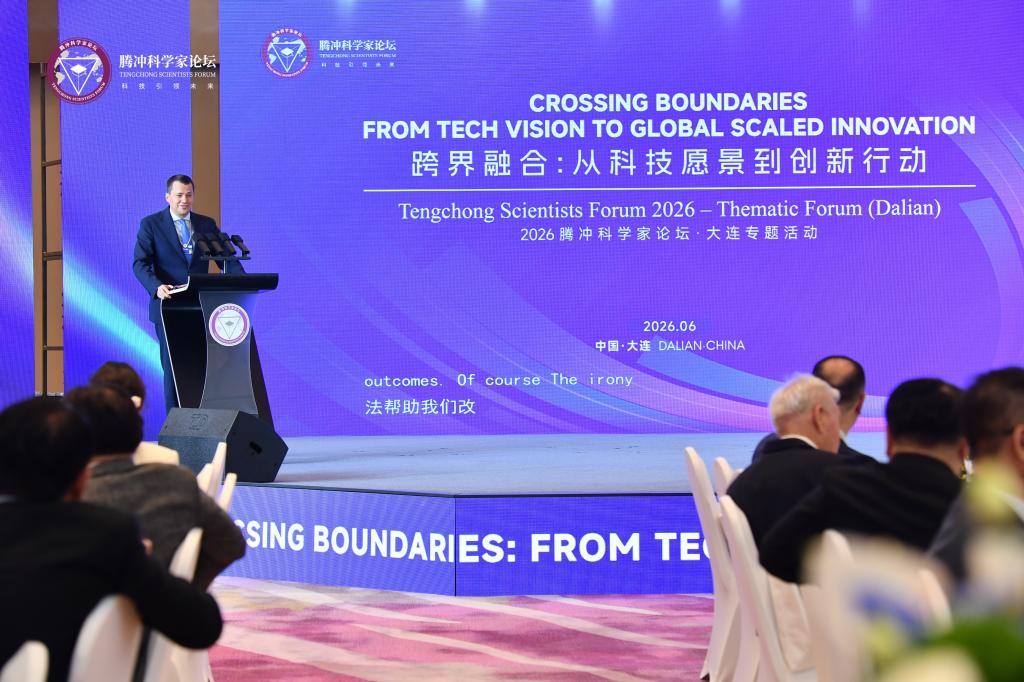
6月23日,2026腾冲科学家论坛(大连)专题活动在世界经济论坛新领军者年会(夏季达沃斯论坛)期间成功举办。来自14个国家和地区的科学家、政商界领袖、高校代表、产业专家及国际组织代表等汇聚一堂,共同探讨科技愿景赋能企业可持续发展、服务社会经济的新机遇和新路径。
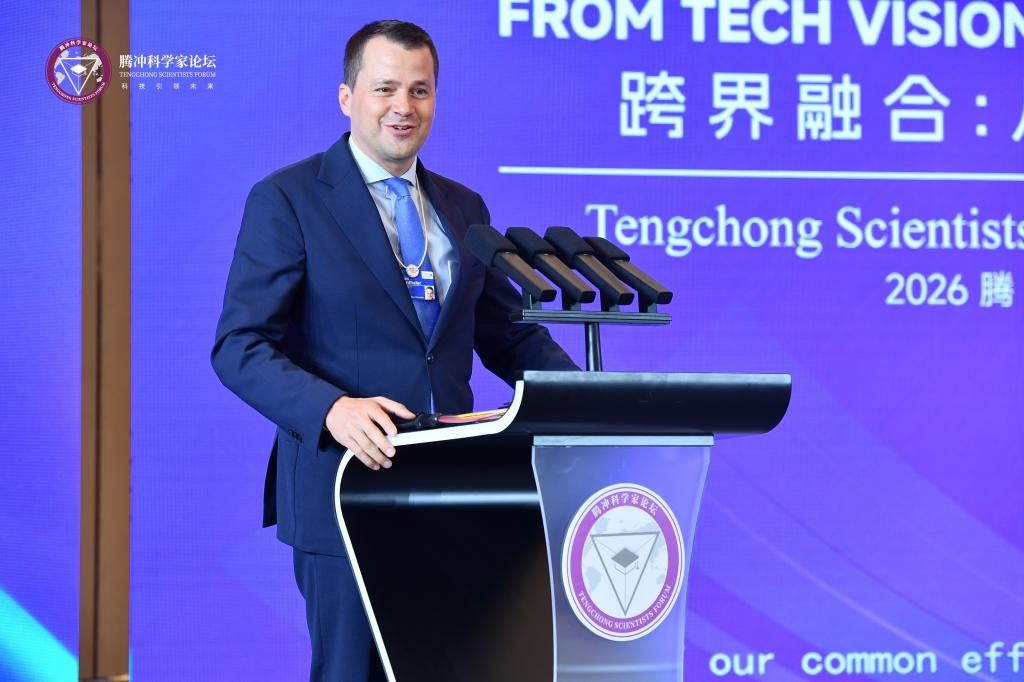
世界经济论坛执行董事、首席技术官马思远(Stephan Mergenthaler)出席活动并发表致辞。在致辞中,他回顾了世界经济论坛和腾冲科学家论坛的长期紧密联系,双方在促进与科学领袖、大学校长合作之间做出的共同努力,并指出当今技术已不能被孤立看待,而是正以跨学科、跨领域的融合方式改变着科学、产品和产业的运作。
以下为讲话全文:
各位贵宾,各位科学家、同事和朋友们,大家中午好。非常高兴来到这里,也非常感谢各位的盛情邀请与介绍。
值此世界经济论坛新领军者年会举办之际,我们能够在此相聚,并了解到世界经济论坛与腾冲科学家论坛之间延续多年的深厚渊源,我感到十分欣喜。数十年来,世界经济论坛始终与全球科学领袖、大学校长保持合作,而腾冲科学家论坛所践行的交流理念,正是我们双方共同努力的核心所在。
在今天的分享开始之际,请允许我提出三点观点。它们支撑着我们当下对技术发展的思考,也支撑着我们的各项工作,我相信这些内容也会体现在接下来的讨论当中。
第一点是技术融合。显而易见,我们已无法再孤立地看待单项技术。技术正日益实现跨学科、跨技术领域的相互关联,全新的创新成果恰恰诞生于不同技术的交汇之处 —— 这是人工智能与生物技术、量子技术等诸多领域的融合发展。这种融合也正在重塑科学研究的运作方式、产品的设计逻辑,以及未来产业的运行模式。但我们也清晰地看到,包括大学在内的众多机构,其组织架构仍沿用严格的学科划分,往往无法适配这种加速演进的技术融合趋势。
第二点是技术扩散。放眼全球,我们见证了许多技术应用的成功落地,但要实现规模化推广,往往是各类组织面临的重大挑战。因此,我们不仅要关注下一个技术突破,更要搭建起从技术愿景到现实价值的转化路径。这离不开科学发现、产业应用、资本与投资标准的多方协同、形成合力。这也正是此类对话的核心价值所在——正如腾冲科学家论坛所倡导、世界经济论坛所深耕的交流模式,具备不可替代的重要意义。
第三点是信任。随着技术加速迭代,信任正成为一项核心资产。失去信任,任何技术都无法真正助力我们改善发展成果。而颇具讽刺意味的是,大量新技术正从多个层面消解着信任,因为它们正与大众的现实生活渐行渐远。显然,没有任何一个国家、任何一家企业或科研机构,能够独自应对技术融合、技术扩散与信任问题带来的挑战。没有任何主体可以独力破解这些难题,这也是我们需要此类交流平台的原因。
对于世界经济论坛而言,有三类合作模式在这一进程中至关重要,我认为这也与腾冲科学家论坛的发展目标高度契合:
一是发挥科学智慧,以好奇心与严谨精神探索全新可能;
二是融合产业智慧,具备将技术突破转化为可靠产品、服务与基础设施的能力;
三是运用治理智慧,拥有让创新发展与公共价值保持一致的能力。
归根结底,我们的责任是让技术融合真正服务于人,而非为了技术而技术、为了增长而增长;我们追求的创新,是能够拓展人类潜能、增强发展韧性、创造共同繁荣的创新。
我十分期待今天的对话,也期待未来与各位携手同行,非常感谢大家。
Distinguished guests, scientists, colleagues and friends:
Good afternoon. It's a real pleasure to be here, and thank you very much for this kind invitation and this introduction.It's a real pleasure to be able to meet here on the sidelines of the World Economic Forum Annual Meeting of the New Champions, and to hear also the long standing connection that our institutions have over many years.
We have at the World Economic Forum engaged scientific leaders, University Presidents for many decades, and this kind of exchange that you are also embodying with the Tengchong Scientist Forum is really at the heart of our common efforts.
So allow me at the outset of this reflection today to just offer three points that underpin our thinking around technologies today, that underpin our work, and that I believe will be reflected in some of the discussions we are about to have.
The first point I want to touch upon is about technology convergence.
It is clear that we cannot look at individual technologies in isolation anymore. It's increasingly connected across disciplines, across different technology domains, and it's precisely at that interface of different technologies that new innovations are emerging. It's the convergence of artificial intelligence with biotechnology, with quantum technologies and so many others.
And so this convergence is also transforming the way science itself works, how products are designed and how our industries need to operate going forward. But it's also clear that many of our institutions, including our universities, are still organized along very formal disciplinary lines, that don't always reflect this accelerating technology convergence.
The second aspect I would like to highlight is technology diffusion.
It is also clear that around the world, we see many applications of technology succeed, but scaling those is often a big challenge across organizations. And so, it is important for us to not just focus on what is coming next, but also to build the pathways to take these visions into real world impact.
And that requires of course scientific discovery, industrial application, capital and investment standards all working together in coordination.
And this is exactly why this kind of dialogue — like you are promoting at the Tengchong Scientist Forum, like we are focusing on at the World Economic Forum — is so important.
The third point I would like to highlight is trust.
Because as technologies accelerate, trust is becoming a central asset. Without trust, none of these technologies will help us improve outcomes.
And of course, the irony is that so many of these new technologies are actually undermining trust in so many ways, because they are further and further removed from the realities of so many people.
So it's clear that no country, no company or research institution can address these challenges of technology convergence, technology diffusion and the question of trust. No one can address these issues alone, so that's why we need exchanges like this.
For us at the World Economic Forum, there are three types of collaborations that are important in this regard.
I think they perfectly reflect what you are trying to achieve with the Tengchong Scientists Forum as well.
That is to bring scientific intelligence to bear: the curiosity and rigor to discover new possibilities; but combine it with industrial intelligence: the ability to turn breakthroughs into reliable products, services and infrastructure; and thirdly to bring governance intelligence to bear: the capacity to align innovation with public value.
Because it is our responsibility ultimately to make this integration work for people, not technology for its own sake, not growth for its own sake, but innovation that expands human potential, strengthens resilience and creates shared prosperity.
I look forward to the dialogue today and to working with you all on the way forward.Thank you very much indeed.
(根据现场发言整理)